
10 Practical Ways to Save Money on Everyday Expenses
Small changes in your daily spending can make a big difference over time. Here are 10 simple and effective ways to save money without sacrificing your lifestyle.


Table of Contents
You don't have to give up everything in order to save money on the things you spend on a day to day basis. If you try to cut out every little pleasure then saving becomes a very frustrating and untenable proposition. A better approach is to look at your monthly expenditure and see what you can trim without making any significant changes to your lifestyle.
Small purchases, unused subscriptions, a lot of food deliveries and bills that are higher than they need to be will all add up over time. Once you've got a good understanding of your spending you can make a few sensible changes and put that money towards things that actually matter to you.
Here are 10 practical ways to save money on your day to day expenses and still have a good life.
1. Track Your Spending
Before you start cutting corners, take a bit of time to get a handle on where your money is actually going. You might be quite surprised at how much you're actually spending on things like coffee, takeaways, online shopping and the various subscriptions you probably don't even use.
Start by looking at your last 30 days of bank and credit card statements. Group your outgoings into three very simple categories: the essentials (rent, groceries, utilities etc), the flexible (eating out, entertainment, shopping etc) and the recurring (subscriptions, memberships etc). You can do all of this via a budgeting app, a spreadsheet or even just a notebook. The point isn't to stop spending money on the things you like. The point is to get a handle on your spending and then make a decision as to where you might be able to make some small changes.
Set aside 10 minutes a week to go through your expenses. A quick weekly review will help you spot any unnecessary spending before it becomes a bigger issue.
2. Cut Unnecessary Subscriptions
Streaming services, fitness apps, cloud storage, online memberships and the like can all quietly drive up your monthly bill. The issue is that a lot of these subscriptions will renew automatically even if you've stopped using them.
Have a look at your recent bank and credit card statements. Make a list of all your active subscriptions and ask yourself if you actually use the service, if you need it and if there isn't a cheaper plan available. You don't have to cancel them all. If you're a fan of various streaming services then you could just go with one at a time rather than have several subscriptions over the year.
If you cancel three subscriptions that are each $10 a month you're looking at saving $30 a month. That's $360 a year which you could then put towards your credit card payments, your savings or whatever else you want.
3. Cook at Home More Often
Eating out and ordering food can be a real timesaver, particularly after a long day. The downside of doing it so often is that it can really eat into your monthly budget. Cooking at home gives you far more control over what you buy, how much you make and how much you spend on food.
You don't need any complicated recipes at all and you don't need to spend hours in the kitchen. Just start with a few meals that are easy to cook and that you can afford. Have your lunch at home rather than buying it every day at work, cook up a few portions of dinner to take through to the next day and keep some of the cheaper ingredients on hand (rice, beans, eggs, frozen veg etc). It's the simple act of replacing a few restaurant meals with home cooked each week that will make a difference in your spending over time.
4. Use coupons and cashback offers
Coupons, loyalty schemes and cashback can all help to reduce your out of pocket shopping costs, particularly if you're going to buy the item anyway. Before you go shopping, check to see if your grocer is offering any digital coupons or discounts via their app. You can also compare prices between stores and look out for cashback on eligible purchases.
Check your coupons before you go to the shops, compare the discounted prices with the other brands and use up your loyalty points before they expire. If you're using a cashback card then make sure you can pay the full balance off on time. Don't just buy things because they're on sale, you only save money by buying a discount on something you actually need.
5. Reduce Energy Costs
Electricity, heating, cooling and water bills are all regular household bills. A bit of tweaking around the house can go a long way to reducing your energy consumption without necessitating any major lifestyle changes.
Switch off the lights when you leave a room, replace your old incandescent bulbs with LED bulbs, adjust your thermostat when you're away from home and where practical unplug the chargers and electronics. You can also wash full loads of laundry rather than several smaller loads and fix any dripping taps. Your actual savings will of course vary depending on your home, the local utility rates, the weather and your current level of energy consumption.
6. Buy Generic Brands
So there's a huge range of goods available in both the name brand and the store brand. You'll find this with things like flour, rice, canned vegetables, cleaning products, paper products and some of the OTC stuff. There are often store brands that are considerably cheaper.
You don't have to go all out and switch everything. Just compare the price, the quantity, the ingredients and the quality of the products you buy regularly. With food products you'll want to look at the nutrition label and the serving size rather than just assume that two products are the same. With over the counter medicines you'd compare the active ingredient, the strength, the dosage form and the directions. The principle is really simple really: pay for the quality and features you actually need rather than just pay for a brand you know.
7. Plan Your Meals
Meal planning can make grocery shopping a lot easier and will help to avoid food waste. Without a plan you're very likely to end up buying things you don't need, forget what you already have in the cupboard or end up ordering takeout because you've no idea what you're going to cook.
Before you go to the shops next time, check your fridge, freezer and pantry. Plan your meals for the week, work out exactly what you need, set a shopping budget and then stick to your list when you're out. You can of course plan meals that share ingredients. The veg you buy for your stir-fry can be used in your soup or your lunch bowl. That way you get much more use out of what you buy and the amount of food that goes to waste is reduced.
8. Shop Secondhand
You don't always have to buy something new. For certain items second hand stores and the various online marketplaces can be a good source of quality goods at a lower price. It's worth considering second hand before you go out and buy new for things like furniture, books, tools, kids' clothes, toys and sports gear.
Before you buy, check the condition of the item, compare the price against new alternatives and make sure it actually works. For electronics and appliances in particular you need to look at the warranty, the return policy, the condition of the battery (if applicable), and the cost of repair. Second hand shopping isn't the answer in all cases so don't go second hand if you can't verify the safety, hygiene or condition of the product.
9. Negotiate Your Bills
Some of your regular bills may be amenable to some saving. Your internet provider, your mobile carrier, your insurance company and so on will often have different plans, different discounts or promotional rates. Once or twice a year it's worth looking at your regular bills and seeing what you can get instead.
When you're talking to a provider ask them if there are any lower cost plans available, if you're eligible for a loyalty discount and whether there are any services in your plan that you don't actually use. You can do a comparison of policies but again make sure you're comparing like with like in terms of coverage, deductibles, exclusions and benefits. A lower monthly payment isn't necessarily the best deal if it means you're losing out on coverage or you're going to be paying additional fees.
10. Automate Your Savings
Saving money is much easier if you don't have to make the same decision every payday. One option is to set up an automatic transfer from your checking account to a separate savings account. You can arrange it to be done just after your pay arrives.
Start with an amount that will comfortably fit within your budget. If you're transferring $50 every two weeks that's $1,300 a year before interest. You can of course adjust that amount as your income or circumstances change. If your employer offers a 401(k) match then you should check the plan rules and consider contributing enough to take full advantage of the match if it makes sense in your circumstances.
To get a feel for how your regular expenses and debt repayments fit into your monthly budget, have a go at our free interactive Monthly Budget Calculator or use the Debt Repayment Calculator to compare different repayment options.
Frequently Asked Questions About Everyday Savings
How much can I realistically save by cutting my day to day expenses?
The amount you can save will of course vary according to your income, your household size, your current level of expenditure and your monthly outgoings. Start by looking at your flexible spendings (i.e. takeout, entertainment, subscriptions, the odd impulse buy etc). Pick one or two of those areas to look at and work on.
Financial Disclaimer: This article is published for educational and informational purposes only and does not constitute personalized financial, legal, or investment advice. Always consult with a licensed fiduciary financial advisor before making significant financial commitments.
Editorial Standards: Our writers and editors uphold strict standards of editorial independence. Advertising or partner compensation does not influence our research, ratings, or advice.
Sarah Johnson
Personal Finance WriterSarah is a personal finance writer with a passion for helping people build better money habits. She covers budgeting, saving, investing and financial planning for everyday life.
Related Articles
View all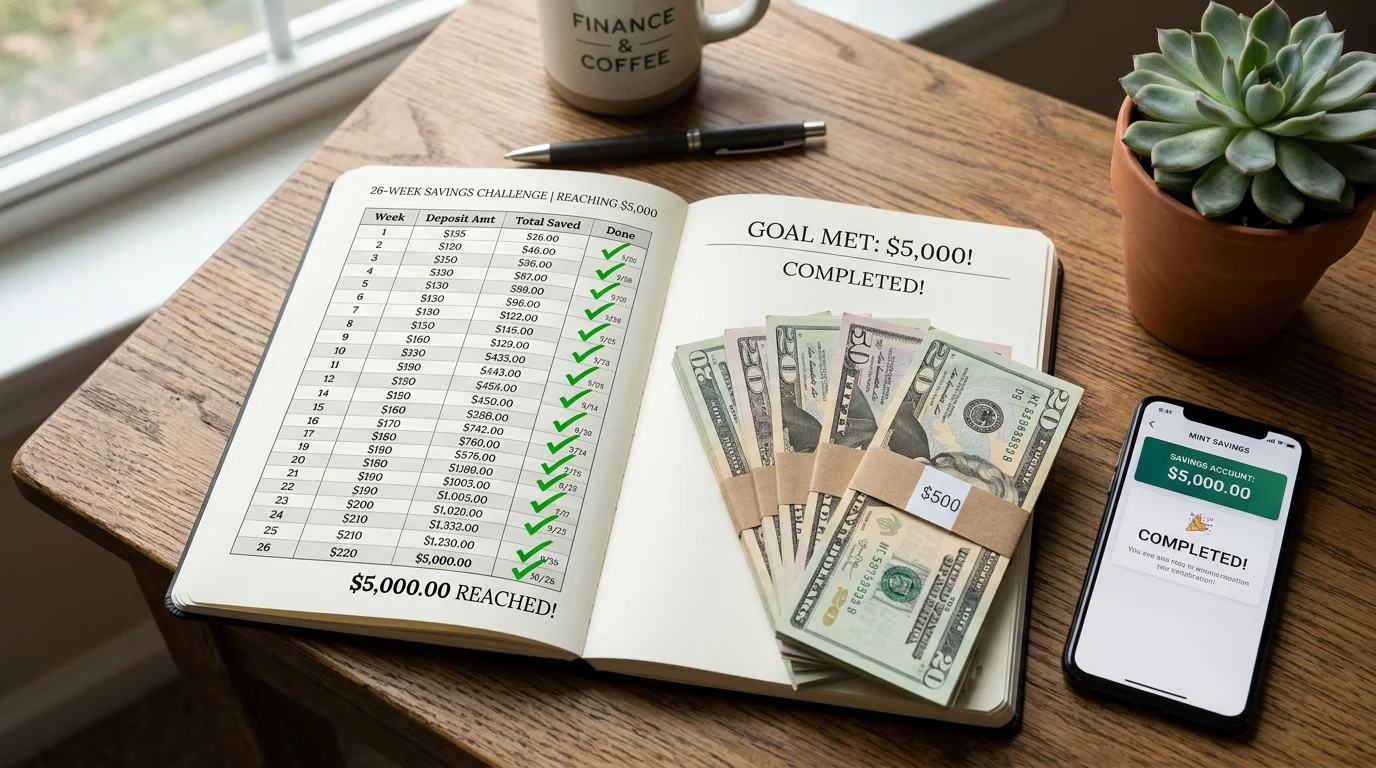
How to Save $5,000 in 6 Months: The Exact Bi-Weekly Paycheck Blueprint
Nov 20, 2026 • 5 min read
50/30/20 vs. 70/20/10 vs. 60/20/20: Which Budget Percentage Rule Actually Works?
Nov 20, 2026 • 5 min read
The Automated Money Funnel: How to Save $10,000 in One Year
Nov 17, 2026 • 5 min read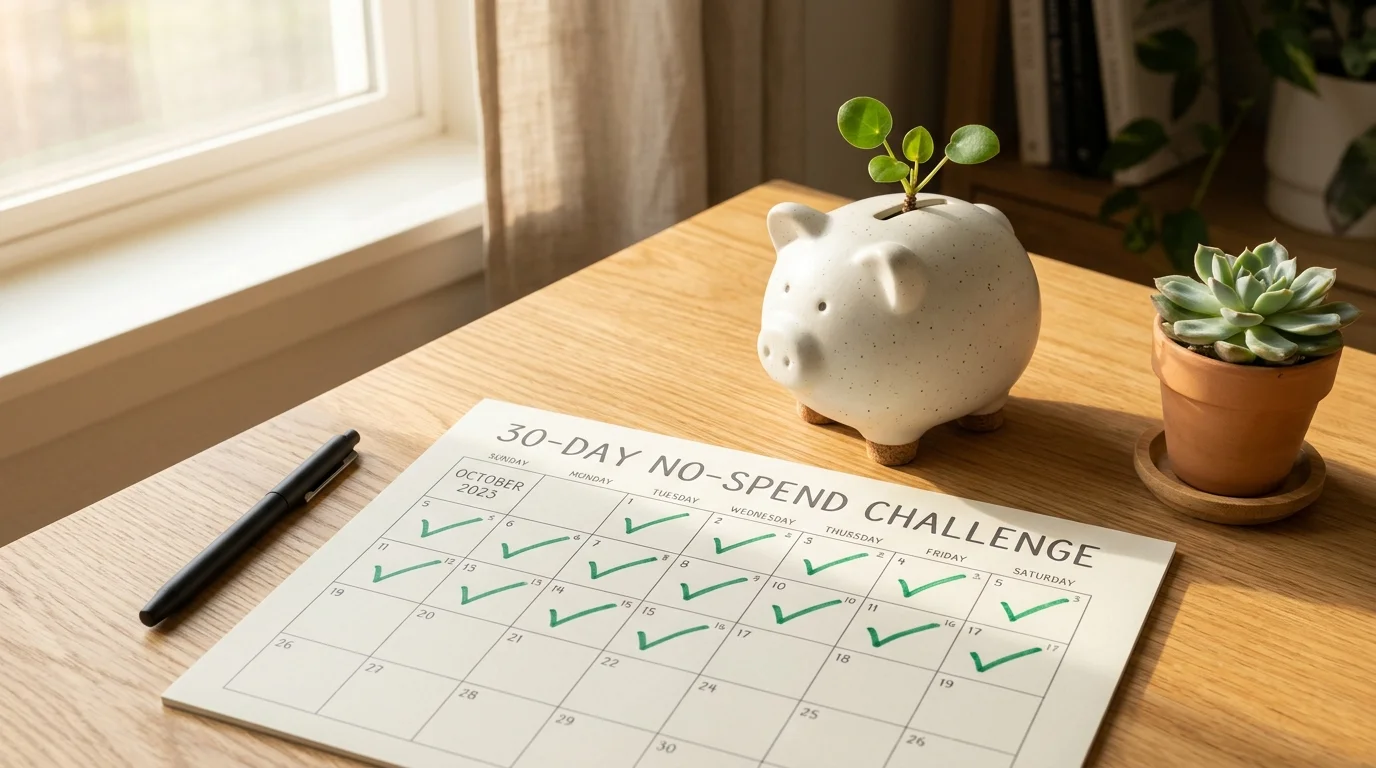
The 30-Day No-Spend Challenge: Rules, Tips & Survival Guide
Nov 17, 2026 • 5 min readGet Practical Money Tips in Your Inbox
Join our newsletter and receive the latest articles, tips and tools straight to your email.
Build a Stronger Financial Future
Explore our free calculators and resources to make smarter money decisions.
Try Free Calculators