
The 30-Day No-Spend Challenge: Rules, Tips & Survival Guide
A 30 day no-spend challenge will help you get back on track. Below are the rules.

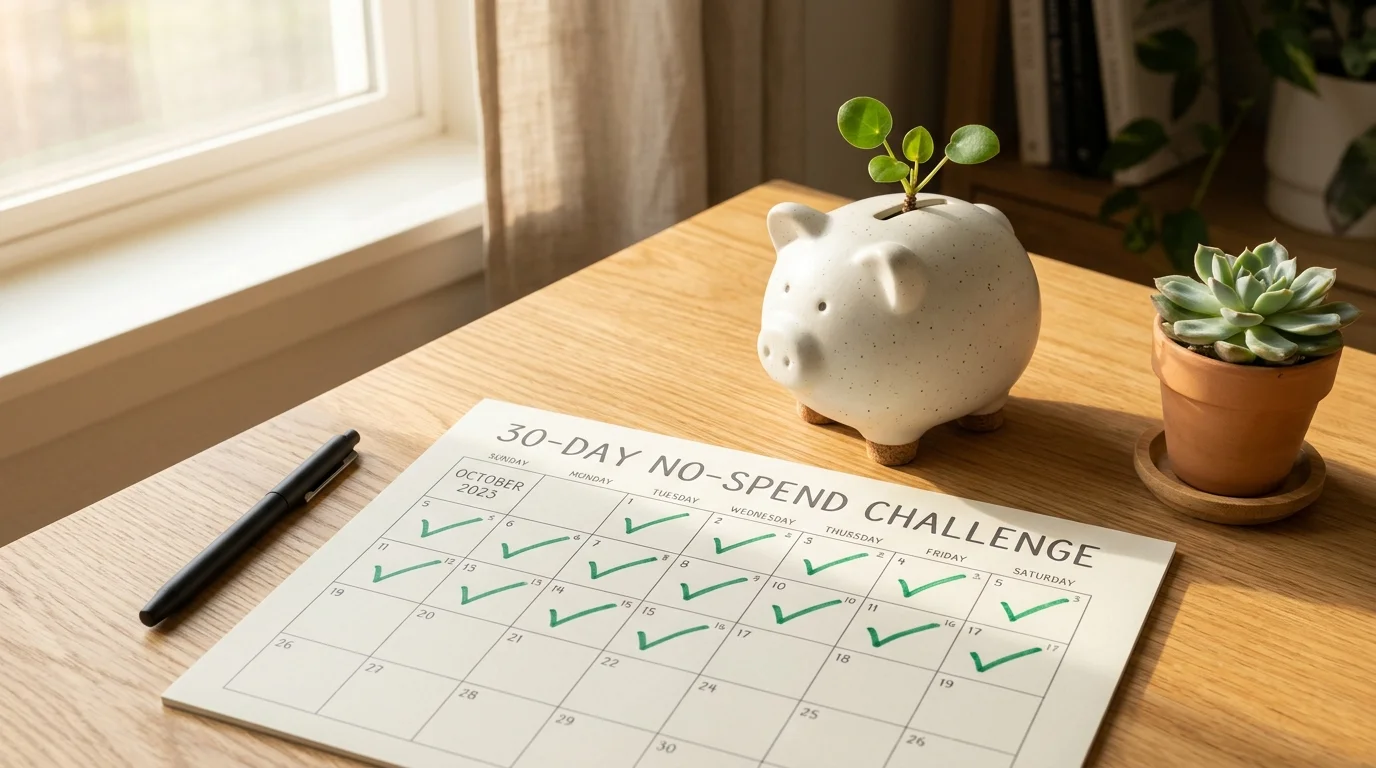
Table of Contents
It’s very easy to get caught up with spending money on social media ads, 1-click purchases, and food delivery apps. Over the course of a week, buying a $7 flat white, random kitchen appliances from Amazon, and a spontaneous dinner out on a Friday can add up to thousands of dollars. To stop impulsive spending, we recommend doing a dopamine reset.
The 30-Day No-Spend Challenge
This challenge aims to make you stop any non-essential spending for 30 days. It allows you to improve your immediate cash position, break uncontrolled spending patterns, and become far more conscious with your money.
A no-spend challenge means limiting your spending to only essential purchases (housing, food, bills, medical) for a specific time period (usually 14 or 30 days). All discretionary, luxury, and impulsive purchases should be frozen.
What Can I Spend and What Can I Not Spend?
The number 1 reason people fail the no-spend challenge is because they aren’t clear on the rules. If you aren’t clear on the rules, you will create excuses to spend on discretionary purchases. Be very clear on what is permitted and what isn’t:
| Category | Essential (Can Spend) | Discretionary (Cannot Spend) |
|---|---|---|
| Food | Essential groceries, fruit, dairy, eggs. Basic cooking at home. | Takeaways, restaurants, DoorDash/UberEats, cafes, and takeaway snacks. |
| Housing | Rent/mortgage, electricity, water, gas, heating in house, and basic internet. | Decorations, candle fragrances, new furniture, and festive decorations. |
| Health | Prescribed medications, urgent medical visits, and essential personal care. | Cosmetic treatments, luxury skincare purchases, spa treatments, and new exercise equipment. |
| Transport | Fuel for commutes, public transport, and essential tolls. | Luxury taxi rides (Uber/Lyft where public transport could be used), luxury car washes, and car accessories. |
| Entertainment | Subscriptions you’ve already paid for (Netflix/Spotify), books from the library, and free park visits. | Going to the cinema, live music, downloading games, in-game purchases, and paid events. |
| Shopping | No purchases (unless a crucial appliance breaks completely). | Clothing, shoes, gadgets, books, and browsing on Target/Amazon. |
How Much Can I Save?
According to the Bureau of Labor Statistics, the average American spends over $1,200 per month on discretionary purchases. By not making these purchases for 30 days, you can quickly make some much-needed savings.
• Dining Out (and Morning Coffee): $350 savings
• Online Purchases & Amazon Purchases: $250 savings
• Going to Bars or Paid Events: $180 savings
• Optimising Pantry Purchases: $150 savings
• Total Amount You Can Save: $930!
This could mean building a beginning emergency fund, or paying off your credit card. Alternatively, you could put it in a high-interest savings account.
3 Tips to Help You Succeed
1. Optimise with Pantry Shopping
Many people have lots of ingredients in their freezers, tins cupboard, and pantry. For example, pasta, frozen chicken, rice, beans, and tinned tomatoes. For the first 2 weeks, try to cook meals out of the items in your pantry. If you do need to go to the supermarket, make sure you only buy cheap, short shelf-life items including bananas, milk, greens, and eggs.
2. The 30-Day Wish List
If you feel the urge to make an online purchase, resist! Add this to a list called "Post-Challenge Wishlist" with the date and cost. In 85% of cases, after 30 days, you will no longer feel the urge to spend on this item. This shows that it was just an impulsive purchase.
3. Plan Free Social Activities
To avoid getting lonely, plan free social activities with friends. Try playing board games at home, going hiking over the weekend, or visiting free museums. Or why not invite your friends over to make homemade pizzas—just make sure to ask them to bring their own ingredients!
Like extremely restrictive diets can cause people to binge, a very strict no-spend challenge can cause you to go on a shopping spree on day 31. Treat day 31 as a step into intentional budgeting, and not a chance to buy everything on your wishlist.
What to Do with Your Money on Day 31
Once the 30 days is over, move your savings from your everyday current account straight away so that you don’t begin slipping back into old habits. Make the most of this money by putting it into:
- A High-Interest Savings Account to boost your sinking funds.
- Paying off high-interest debt using our Debt Snowball Calculator.
- Making a realistic budget with our free Monthly Budget Calculator.
Frequently Asked Questions
What if an emergency happens?
If there is an emergency expense such as a broken alternator in your car, or an urgent dental appointment, then it is fine to pay for this. However, it is important to note that the purpose of a no-spend challenge is to stop impulsive, unnecessary spending. Therefore, if you have to pay for something due to emergencies regarding your health, job, or safety, it is still fine. Simply pay and get back on track with the challenge.
Can I buy presents for family members?
If a special occasion such as a birthday or wedding falls in the same month, consider allowing a small present in advance, or giving a meaningful gift instead of money. For example, baking something, a heartfelt letter, or babysitting. If you plan in advance, this won’t cause a budget issue.
Should I do a 14-day no-spend challenge as a beginner?
If you’ve never done a no-spend challenge before, a 14-day challenge (or two weekend challenges) is a great place to start. It gives you quick success, and builds confidence so that you can complete a full 30-day challenge in the future.
Can I have coffee whilst on a business trip?
If your meals are being covered by your employer, then it is fine to make normal purchases on your travels. However, if you are paying for it yourself, make coffee in the hotel room or take a portable coffee cup with you so that you stay on track.
Financial Disclaimer: This article is published for educational and informational purposes only and does not constitute personalized financial, legal, or investment advice. Always consult with a licensed fiduciary financial advisor before making significant financial commitments.
Editorial Standards: Our writers and editors uphold strict standards of editorial independence. Advertising or partner compensation does not influence our research, ratings, or advice.
Editorial Team
Managing Editor & Site AdministratorThe MoneyWise editorial team is dedicated to producing actionable, unbiased, and mathematically sound personal finance guidance for US consumers.
Related Articles
View all
How to Save $5,000 in 6 Months: The Exact Bi-Weekly Paycheck Blueprint
Nov 20, 2026 • 5 min read
50/30/20 vs. 70/20/10 vs. 60/20/20: Which Budget Percentage Rule Actually Works?
Nov 20, 2026 • 5 min read
The Automated Money Funnel: How to Save $10,000 in One Year
Nov 17, 2026 • 5 min read
Cash Stuffing & Digital Envelopes: Complete Beginner's Guide
Nov 17, 2026 • 5 min readGet Practical Money Tips in Your Inbox
Join our newsletter and receive the latest articles, tips and tools straight to your email.
Build a Stronger Financial Future
Explore our free calculators and resources to make smarter money decisions.
Try Free Calculators